

Peter Matheson
By Anne Manchester
Early Life, Faith and Political Awakening
The Rev Dr Peter Clarkson Matheson lived a rich and talented life, based around community and the desire for peace. He identified his participation in the Peace Movement in New Zealand as the most formative event in his life, even as his career switched between the worlds of academia, church and public life.
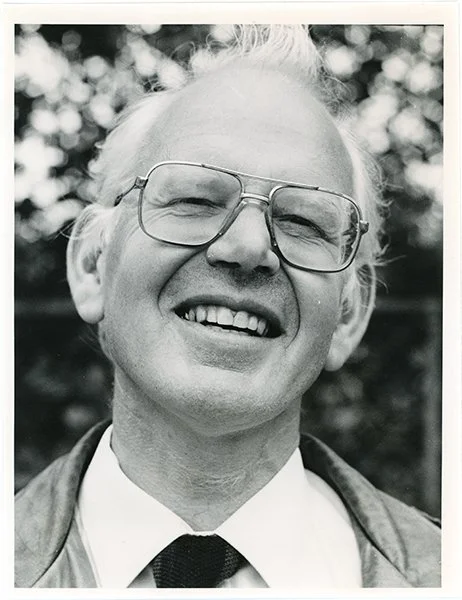
Campaigning for environmental justice was also important to him. “One protests because one despairs of normal politics,” he wrote. “But also because one is gripped by the menace of hope. It’s a tough balance: the stakes are huge, our whole future on mother earth, this common home of ours.”
Peter was born in Scotland in 1938 to James and Janet (née Clarkson) Matheson. The family moved to Dunedin in 1951 when James, a minister in the Church of Scotland, was appointed to Knox Church. There he became even busier than he had been in Edinburgh.
As a pupil at Otago Boys' High School in the 1950s, Peter felt alienated from its rugby, cadet, caning culture, somewhat isolated by his Scottish accent and critical of the low standards of much of the teaching.
In contrast, he enjoyed the liberation of becoming a student at the University of Otago, describing this as his turangawaewae.
He delighted in discovering the world of thought through English and German literature, engaging in political debate, haunting the library and buying daring books. Peter received a first-class honours degree in history.
Initially, Peter identified as an existentialist and was contemptuous of his father's congregation's beliefs and worship. But while working as a student during a summer vacation in a Roxburgh orchard, he had a mystical experience of peace and oneness with creation that changed his life forever. He applied to train for the ministry and switched to theology.
He became an active leader in the Knox Church youth group and helped organise Dunedin's first peace march against nuclear weapons. Other political activities included editing the student newspaper Critic and running the university's political club.
Scholarship, Activism and International Influence
The Matheson family, including Peter, returned to Edinburgh in 1961. On board the ship, he developed a friendship with lan Breward, another Knox student, who was about to undertake postgraduate study in Manchester.
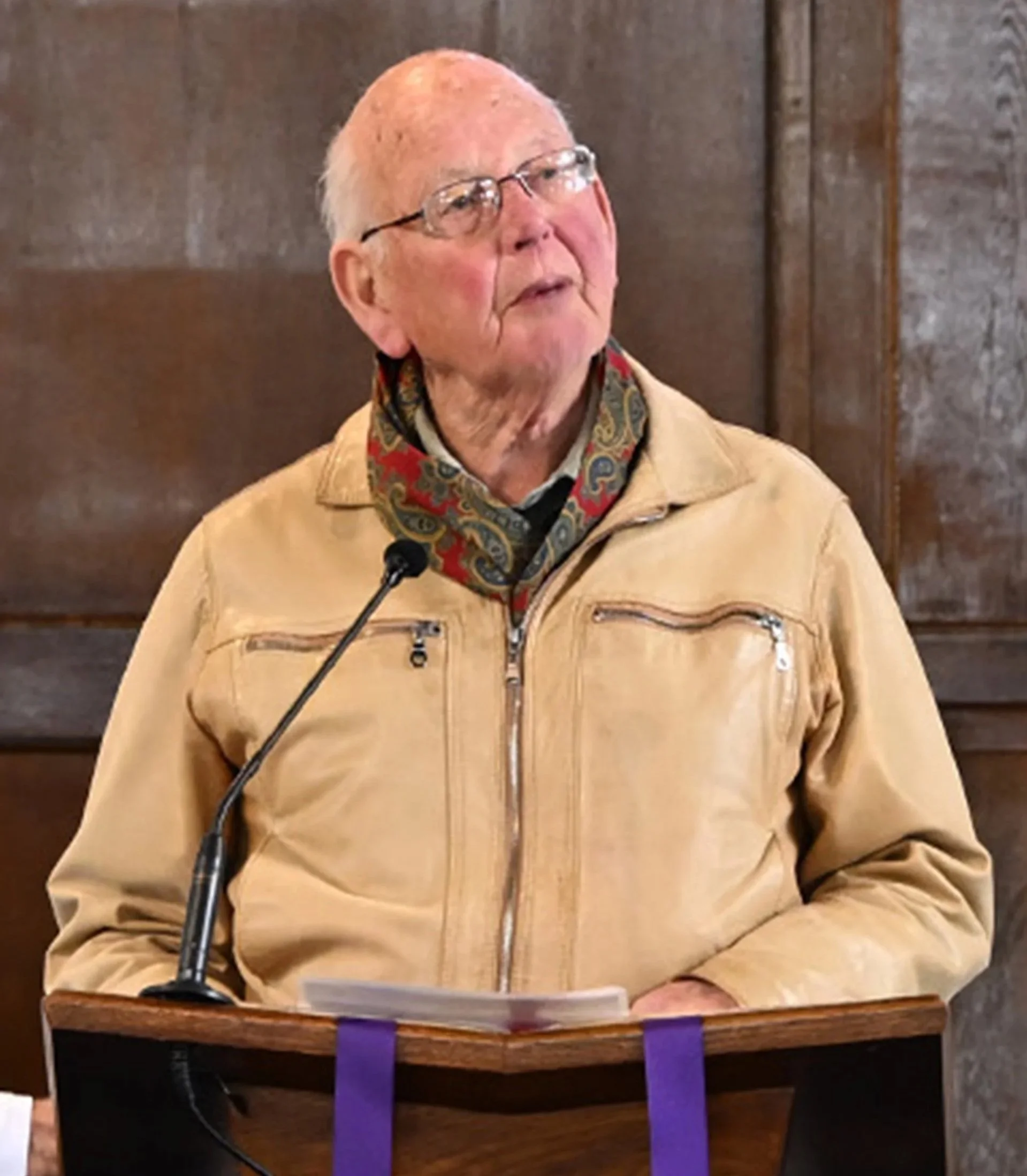
At first, Peter struggled at New College with its formal, traditional atmosphere, not to mention “miserable food”, but he made good friends and found his study of ecclesiastical history refreshing. The liberal approach of Alex Cheyne, professor of church history, captured his imagination and encouraged him to begin doctoral studies.
A summer on the island of lona, where he learned the rhythms of worship and community life led by the charismatic George MacLeod, reinforced Peter's commitments to pacifism, socialism and activism. As the community celebrated the 1400th anniversary of St Columba’s landing, he also gained a sense of belonging to a history going far back beyond Protestantism.
Peter spent two years at the University of Tübingen in southwest Germany studying Cardinal Contarini and his unsuccessful attempts to forge dialogue and reconciliation between Catholics and Protestants, bitterly divided by the Reformation.
He was stirred by the radical biblical scholarship of Ernst Kasemann, enriched by student friendships and exposed to the challenges of Germany's post-war recovery and division. “For the first time ever, I was seized by the excitement of genuinely radical biblical scholarship and by hermeneutics,” he wrote in 2014.
Peter fell in love with Heinke Sommer, sister of his student friend Hartmut. They married in Bonn in 1965.
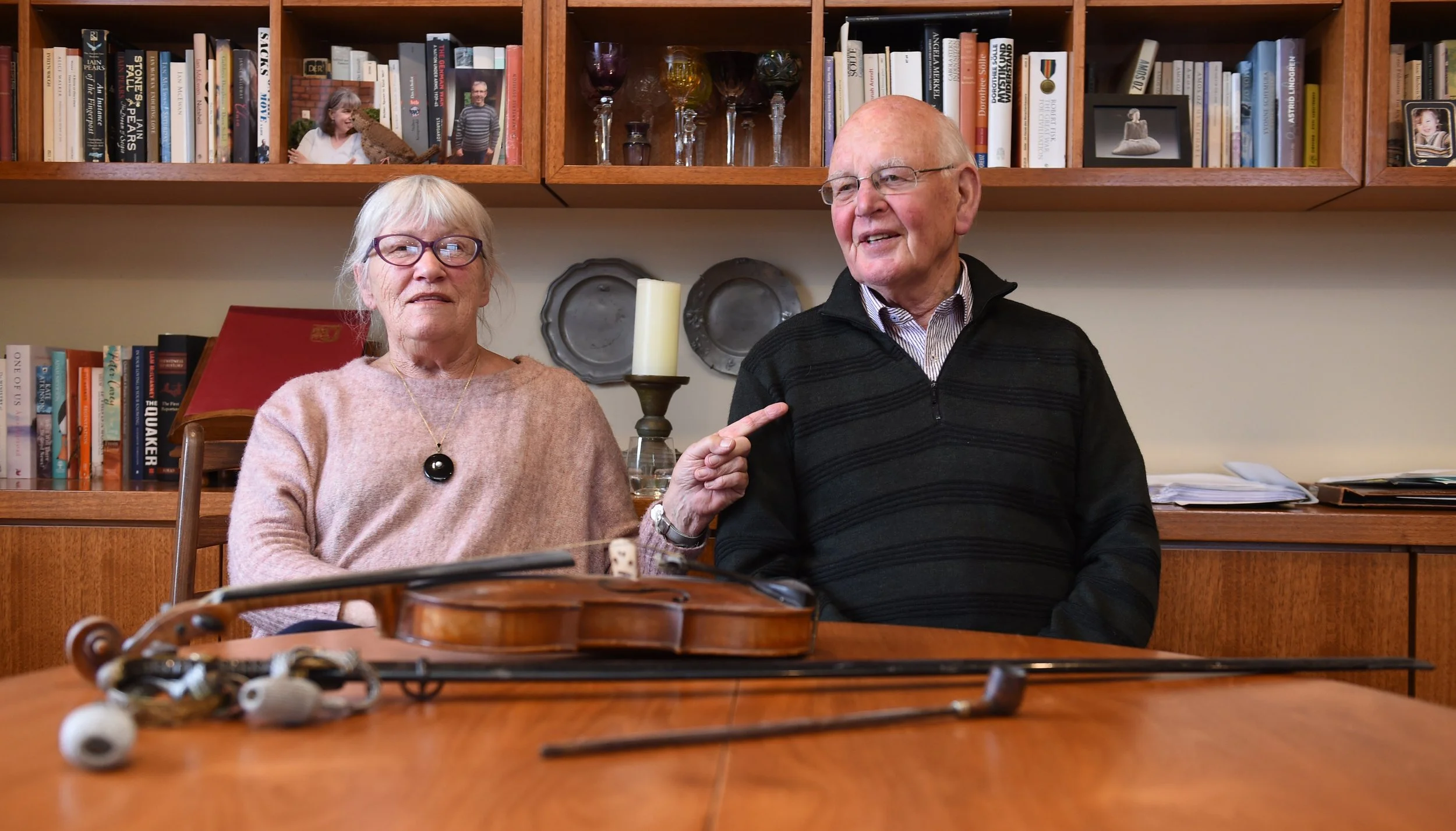
Heinke Sommer-Matheson and Peter Matheson. Photo: Gregor Richardon, Otago Daily Times
Peter was appointed to a new lectureship at New College in 1965, covering the Renaissance/Reformation period. It was an intense time, finishing his doctorate and facing new family demands, with the birth of Catriona, the grief of the premature birth and death of Gesine and the joy of Donald's birth.
In the university's history school, his course on the German churches and national socialism was very popular, leading to his publication, The Third Reich and the Christian Churches (1981).
Peter's discomfort with the Church of Scotland was expressed in the “Dissembly” he organised as a satirical counterpart to its General Assembly. For some, his actions were an affront, but for Peter, the Dissembly's purpose was “to question, to protest, to act as a catalyst” for change.
The threat of nuclear war and The Troubles in Northern Ireland saw Peter and Heinke becoming members of Parents for Survival and supporting protests against nuclear weapons. Peter travelled to Belfast frequently and behind the Iron Curtain, visiting peace groups and encouraging reconciliation.
His extensive work with the Fellowship of Reconciliation led to the publication of Profile of Love: Towards a Theology of the Just Peace (1979).
Return to New Zealand and Community Leadership
In 1979-80, Peter and Ian Breward, then professor of church history in Dunedin, exchanged teaching positions. A year later, Breward moved to Melbourne and Peter was appointed in his place.
Peter’s great rhetorical skills and passion now found expression from the pulpit. He took seriously the New Zealand-Pacific context, writing the chapter, The Settler Church, in Presbyterians in Aotearoa 1840-1990.
Peter and Heinke's home became a place of hospitality. Peter provided significant leadership to the interdenominational community of St Martin Island in the Otago Harbour. This became his marae, an activist community, concerned about peace and the environment, as well as an inclusive spirituality, expressed in his poem, Aramoana Christ:
Angel nor saint have I seen,
But I have heard
The roar of the surf.
And quiet at harbour
Rests the isle of my heart.
Salt tears still fall
Loud lament of the gulls,
Till justice roll down,
Till the earth is clothed,
Till creation is restored.
Jesus, healer and friend,
You walk these sands
Through sea-mist and sun;
Touch the folk of this land
With the vision of joy.
Waters swirl and tides flow
Generations rise and fall;
Love is our Alpha and Omega
Our flag in the wind
Our taproot in the soil.
His appointment as principal of the Uniting Church Theological Hall at Ormond College, Melbourne, in 1998 was “liberating” and “a wonderful six years”.
Peter retired to Waitati, where he and Heinke enjoyed the rural environment, being close to the sea and to Te Whare Wānanga Marae.
They jointly authored Love and Terror in the Third Reich (2019), from the letters between Heinke's parents when her father was serving with the German army at the Russian front.
In retirement, Peter continued to be active in research and writing.
His uncomfortable prophetic witness to peace and justice and to a renewed environment reflected his “belief in the power of words — to reimagine, to create new possibilities”, and, as he expressed it in his Easter 2024 Otago Daily Times editorial, to make “a defiant response to radical evil”.
Peter died in April 2025, aged 86.
With thanks to Allan Davidson and his obituary on Peter Matheson, A Determined Voice for Peace, published in the Otago Daily Times on 18 May 2025. Additional information from Peter Matheson, My Life of Protest (unpublished notes, date unknown) and Peter Matheson, In Search of Utopia (unpublished notes, Autumn, 2014).
Resources:
Book: Here I Belong: Poems by Peter Matheson. Edited by Graham Redding. 2025. https://www.amazon.com/Here-Belong-Poems-Peter-Matheson-ebook/dp/B0FSXGD58J
Book: Revolution at the Kitchen Tables: Churches and the 1980s Peace Movement. Chapter 5 from: Pursuing Peace in Godzone: Christianity and the Peace Tradition in New Zealand . Victoria University Press. 2018. https://www.academia.edu/36077483/Pursuing_Peace_in_Godzone_Christianity_and_the_Peace_Tradition_in_New_Zealand_Edited_by_Geoffrey_Troughton_and_Philip_Fountain_Wellington_Victoria_University_Press_2018
Video: PPIG – Revolution at the Kitchen Tables_ Churches and the 1980s Peace Movement.mp4. 2018. https://drive.google.com/file/d/1UNCZejTp0Y7dgUGqnjXGQVPqDThgP2Hp/view?usp=sharing