

Shirley Erena Murray – Hymn Writer, Theologian, Poet and Prophet
Shirley Erena Murray always loved writing. Her gifts were recognised even when she was at primary school.
Shirley (christened Shirley Erena Cockcroft) was born in Invercargill in 1931. She attended Invercargill Middle School, graduating dux in 1943, then moving to Southland Girls High School. One of her early teachers was sure she would become a poet; she certainly wrote lots of them, particularly nonsense rhyming poems. These were often published on the children’s page of the Southland Daily News and later in her school magazine.
It would take many decades for her to discover that her real gift and passion would be writing hymns for progressive, inclusive congregations, focused on issues of peace and justice that always meant so much to her.
Early Life, Education and Family
Shirley excelled academically and musically. She studied classics and music for her undergraduate degree at the University of Otago and completed an MA 2nd class honours degree in Latin and French in 1952.
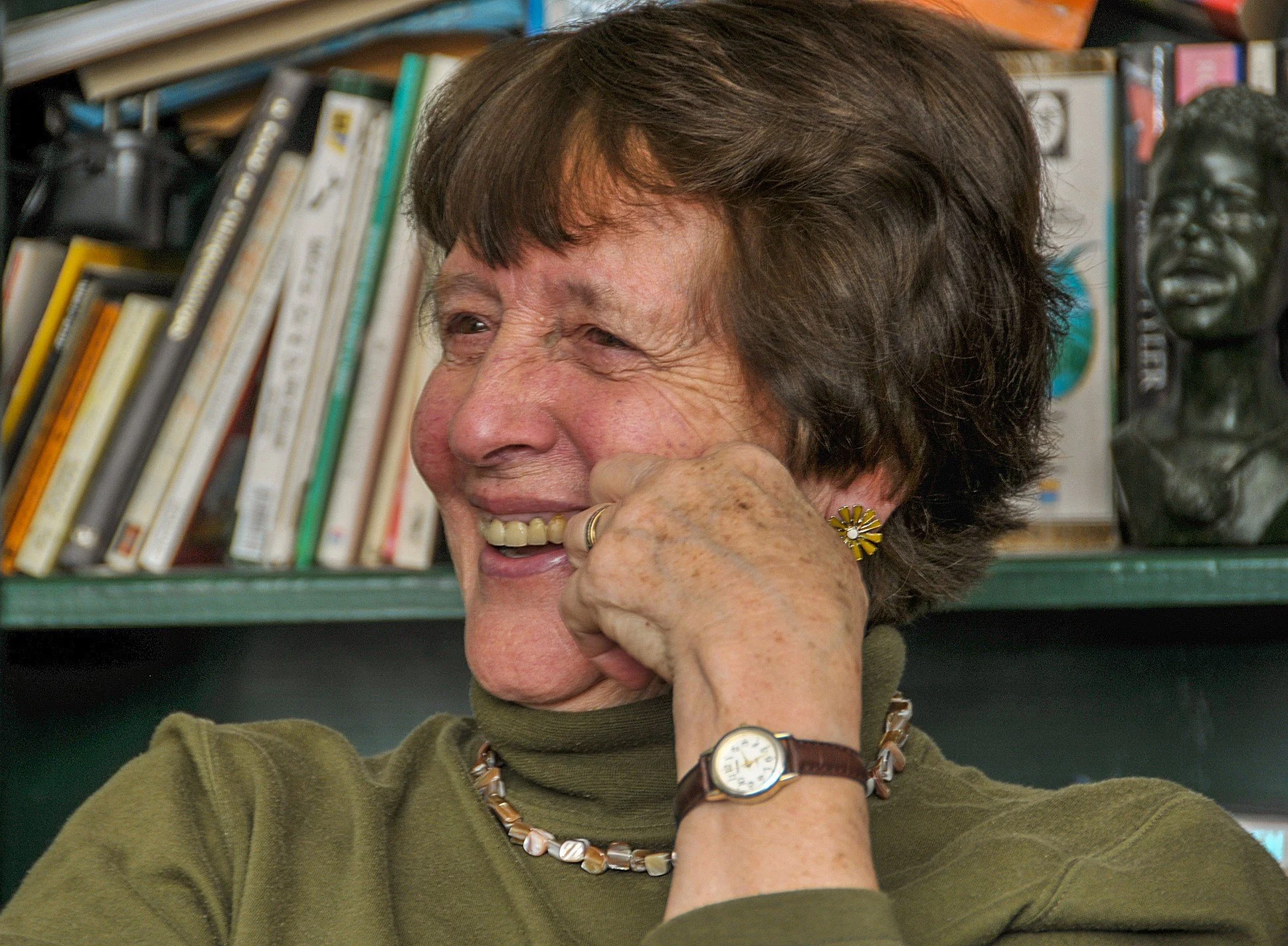
While at university, she became engaged to John Stewart Murray. His calling to enter ministry in the Presbyterian Church saw him study theology at Westminster College in Cambridge, England. The couple married in Cambridge in 1954.
Family life and supporting John’s work as a minister back in New Zealand consumed much of Shirley’s life for the next two decades. With most of John’s time taken up with parish work and other church commitments, she found herself doing most of the parenting for their three sons, David, Alastair and Robert.
A Turning Point: The New Zealand Hymnbook Trust
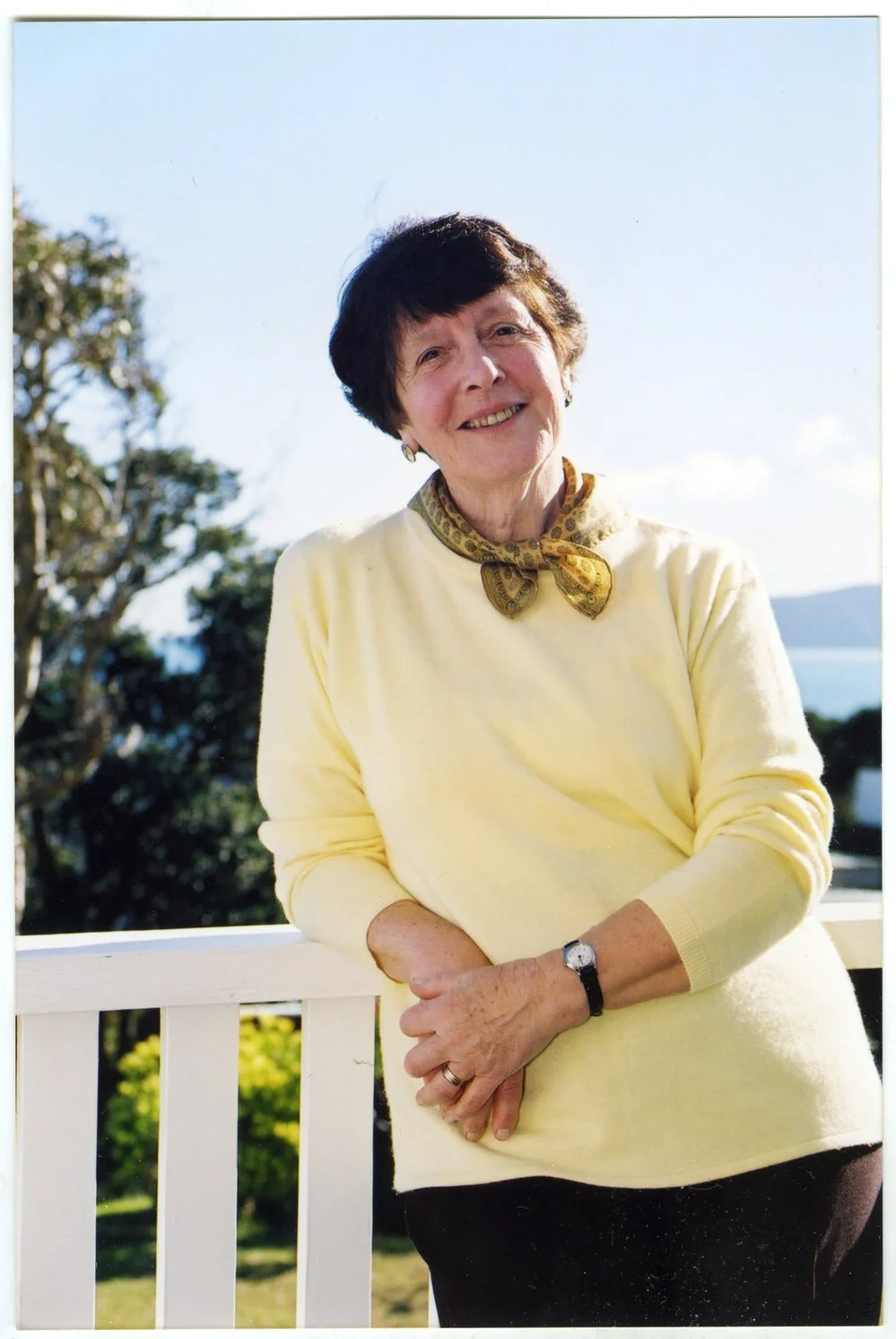
But a turning point came when John helped establish the New Zealand Hymnbook Trust in 1979. Shirley became secretary to the trust’s editorial board and met some influential hymn writers and composers like Colin Gibson from Dunedin, Jillian Bray from the Kāpiti Coast and Guy Jansen from Wellington.
In establishing the New Zealand Hymnbook Trust, John wanted to create a body of new hymns written by New Zealanders, in language that was both inclusive and indigenous. He had become increasingly frustrated that there were so few hymns to support the social gospel and progressive theology he sought to preach Sunday by Sunday. He frequently reached out to Shirley to write something that the congregation at St Andrew’s on The Terrace could learn and enjoy singing.
At first Shirley wrote new words to well known hymn tunes. But she later moved away from this idea, when she realised new words needed new tunes to really embrace new ideas.
During the 17 years John and Shirley were at St Andrew’s on The Terrace, they and the congregation supported several political and social causes including the nuclear free movement, anti-racism, homosexual law reform, the work of Amnesty International and environmental protection.
Writing for Peace, Justice and Faith
Peace was Shirley’s most abiding theme, a term that meant far more to her than simply opposition to war.
“Almost everything I have written revolves ultimately round the concept of peace in all its many manifestations,” she wrote in 2010.1 And in 2014, she added: “Everything radiates from it. Peace is environmental care, it’s the atmosphere and ambience in which good and great things happen. Lack of peace equals hunger, domestic violence and abuse of children, and fragile human relationships.”
Themes were exciting for Shirley, as was the ability to write simply and poetically, discovering new metaphors and language for God. Over her nearly 40 years of hymn writing, she discovered there was always more to keep writing about. In 1995, she wrote a hymn about AIDS. Other themes included unemployment, racism, health and healing, homelessness and the plight of refugees. She also wrote hymns for the different seasons of the church year, including Christmas, Easter and Pentecost.
A Lasting Legacy
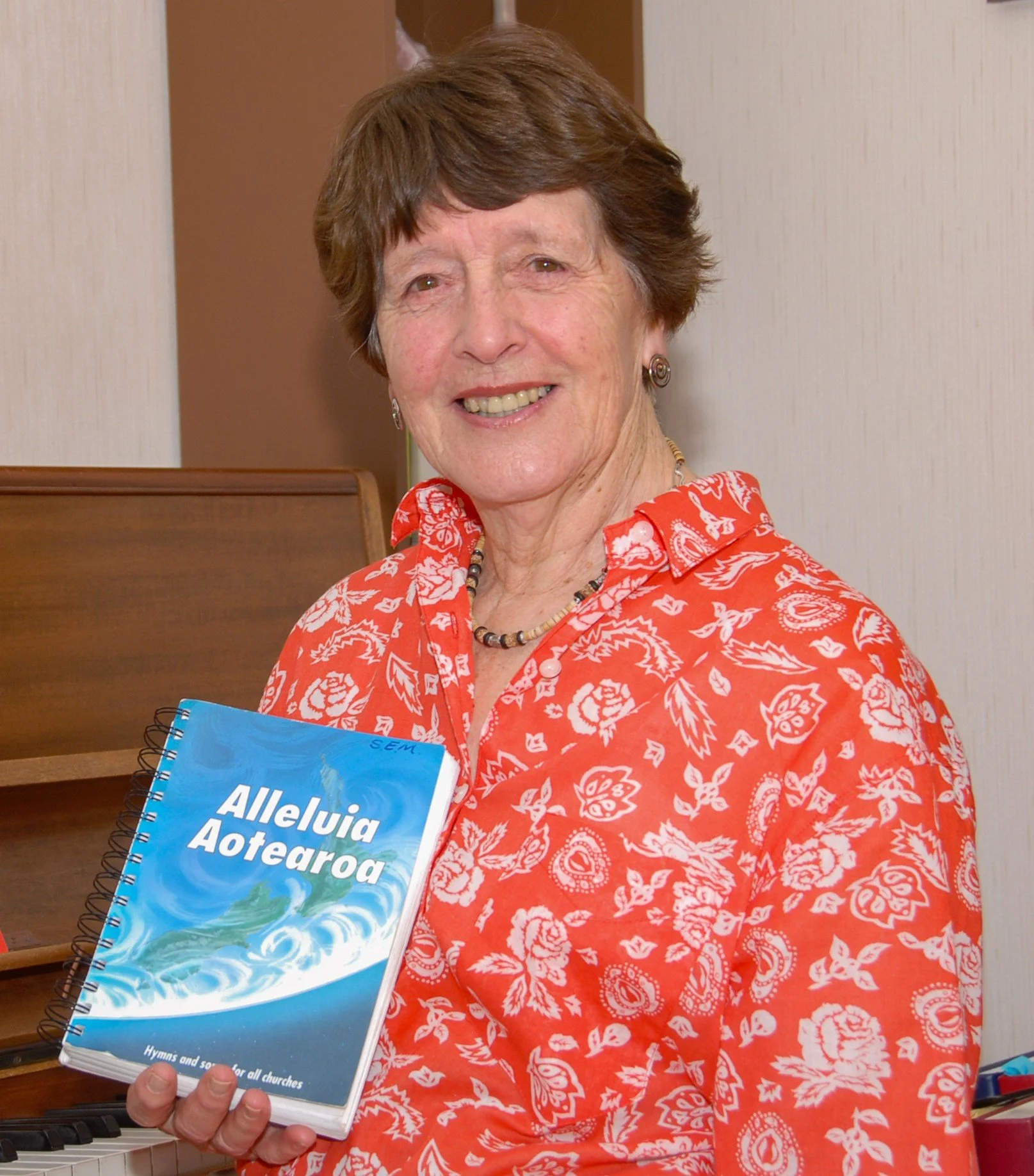
Shirley wrote around 400 hymns, many of them published in the five publications of the New Zealand Hymnbook Trust and others in six of her own collections published by Hope Publishing Company in the United States. They continue to be published in hymnals across denominations in North America, Oceania, the United Kingdom and Europe.
Shirley was a text writer – she did not compose the music for her own work, though she was a fine musician. One of the greatest satisfactions of her hymn writing career, she often said, was working with composers from around New Zealand and the world, and hearing her words being given new vitality through new tunes.
Shirley’s last collection of hymns (Life into Life: New and Collected Hymns) was published only a few months before her death on 25 January 2020. John had died three years previously.
Her legacy is a body of work that enables us to sing the gospel truths in contemporary language, and to address the issues that continue to be the most pressing in society and in ourselves.
Resources
A biography of Shirley – Peace is Her Song: The life and legacy of hymn writer Shirley Erena Murray – by Anne Manchester was published by Philip Garside Publishing Ltd in September 2024.
Reference (3) Wootton, J. (2010) This Is Our Song: Women’s Hymn-Writing. Eugene, Oregon: Wipf and Stock, p296.
Reference (4) Bell, G. (2014) In Conversation with . . . John and Shirley Erena Murray. Sine Nomine. Newsletter for the Southern Ontario Chapter of the Hymn Society of the United States and Canada.