

Building Better Communities in Whangārei
By Anne Manchester
Where It All Began
Addressing critical social justice issues within the Whangārei community and showing the relevance of the gospel was the aim of a six-week discussion series organised by the Kaurihohore/Kamo Co-operating Parish.
Run earlier this year, the Building Better Communities series was the second time the parish had organised the event. The series covered a broad range of social justice topics, ranging from children and youth, to crime and punishment, and Māori wellbeing. The Salvation Army’s State of the Nation annual report is the major resource behind the series.
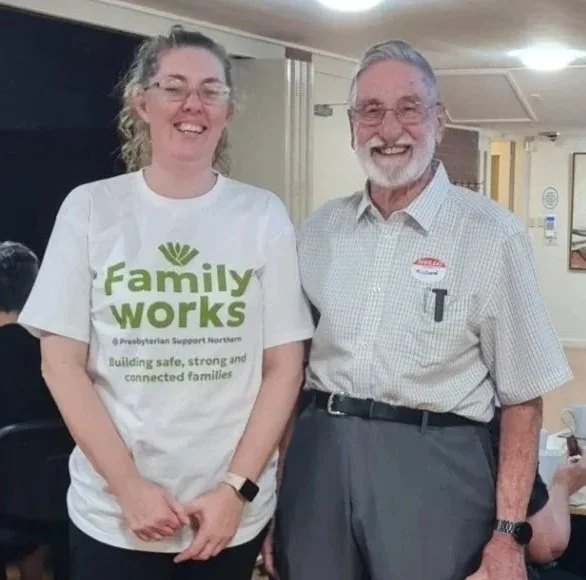
Kelly Muriwai (left) and Richard Smith (right).
“Building Better Communities arose out of the parish’s desire to find a new mission, one that would enable us to more closely engage with our local community,” said parish councillor Richard Smith. “We ran the first series in 2023. Our plan is to run it every three years, coinciding with the national election cycle.
“We believe Christians are called to be politically as well as socially active – we’re not just a club for ‘holy people’. People in our congregation have a variety of perspectives on understanding faith and belief, but our mission is to share God's love, create hope and work for justice.
“We can’t fund the services the community needs, but we can bring pressure on those who decide what does and doesn’t get funded. Our aim is to ensure that local and central government politicians hear what truly matters to the people of Whangārei.”
This year, the series was held in St John’s Golden Church, a larger venue and closer to town. Invitations were sent to all churches in the area and to local media, with a grant from the Northern Presbytery Mission Fund helping advertise the series. Half of those who attended had no church connections.
Team leader for Presbyterian Support Northern (Whangārei), Kelly Muriwai, led the first session. Her 20 years’ experience in social work and fostering provided a thoughtful foundation for the conversations that followed.
During the small-group discussions, participants identified a range of urgent issues, from immediate physical needs like hunger and food anxiety to deep-seated systemic barriers. Groups identified the shame (whakamā) often associated with receiving support, as well as the impact of transience on school attendance. Intergenerational trauma and the impacts of colonisation were identified as root causes of these hardships, A broken tax system and lack of funding for frontline services exacerbated the problems.
Several actionable steps were identified, including the use of schools as community support hubs to provide food, mentoring, and care for the entire whānau. Participants called for the government to prioritise the total elimination of child poverty and suggested systemic changes such as a universal basic income and better-coordinated care through navigators.
Although agreeing the government needed to step up to fund and improve services, Kelly also encouraged participants to “get stuck in and do the work the community needs. It’s no use waiting for someone else to do it.”
She pointed to initiatives like Support Northern’s winter warmer packs for children from lower-decide schools. Packs include beanies, knitted blankets, hot water bottles and pyjamas. Her latest campaign is organising Christmas bags for similar groups of young people. “I want our clients and their children to feel supported and uplifted. When people are affirmed in this way, they can feel empowered to make changes,” she said.
Facing Crime, Work and Housing Together
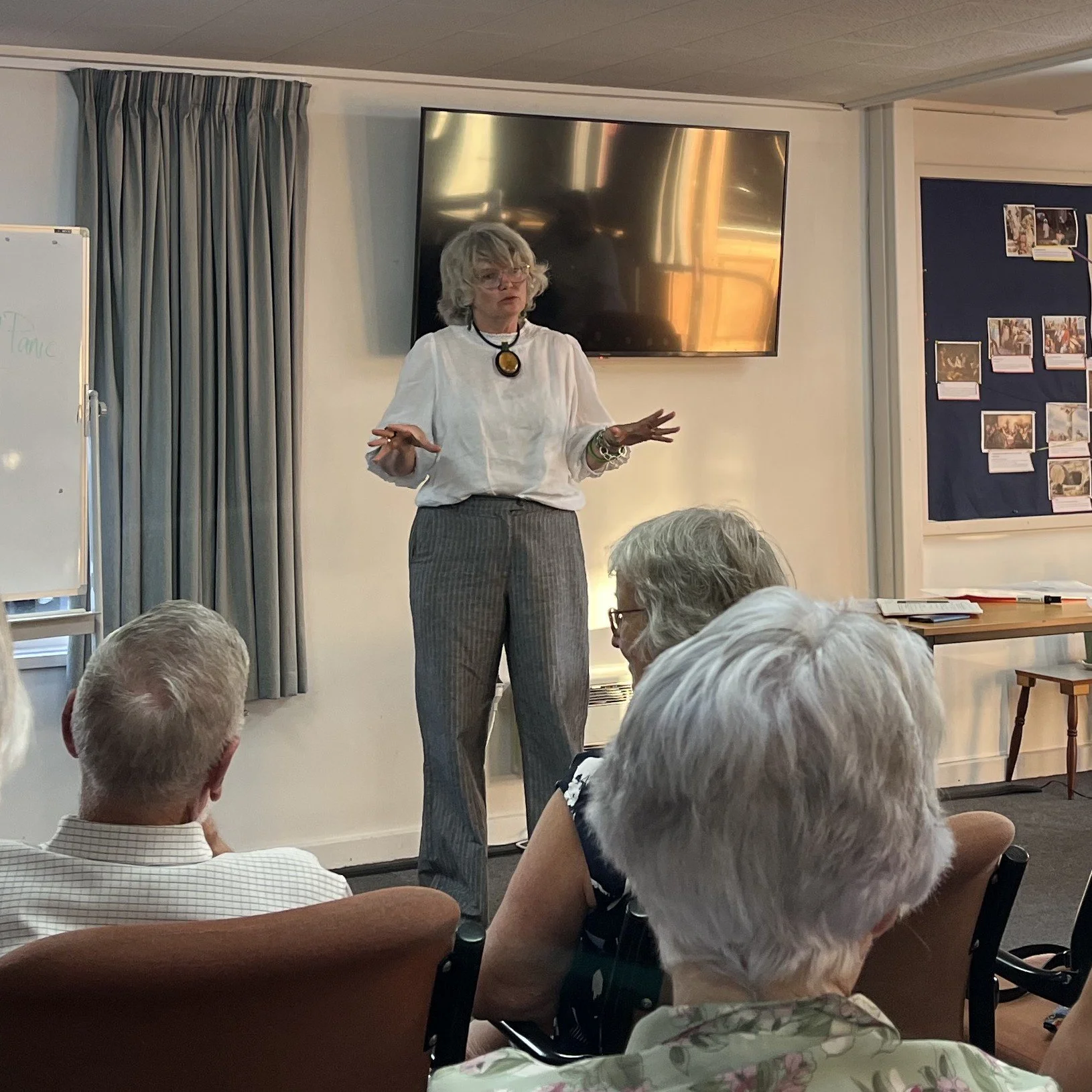
The second week focused on crime and punishment. Academic researcher and former MP Dr Emily Henderson explored the concept of “moral panic”. This weaponised fear and led to simplistic answers that failed to produce practical results. Emily provided a sobering contrast between the public outcry over 433 ram raids recorded in 2022 and the staggering 176,000 family violence callouts that same year. She noted that 95% of children involved in ram raids were themselves victims of family violence. Up to 75% of youth in the justice system had mental health or substance disorders, and many suffered from traumatic brain injuries or literacy issues.
The community expressed a dream for a proactive system that focused on the whole person and addressed underlying social issues like poverty and lack of connection. There was a shared belief that youth must be seen as part of the solution rather than the problem.
The third topic was work and incomes, introduced by Edward Miller from the Centre for International Corporate Tax Accountability and Research. New Zealand was in its fourth year of a cost-of-living crisis, he said, with unemployment rising from 120,000 to 160,000 people between 2023 and 2025. Unemployment disproportionately affected Māori (11.2%), Pasifika (12.3%) and youth, with 17.4% of young people in Northland currently unemployed.
There was a strong consensus that the current taxation disparity prevented the community from looking after one another as it did in the pre-neoliberal era. Hardship should be seen as a shared risk rather than a personal failure.
Ange Tepania, kaiārahi/manager for the Tai Tokerau Emergency Housing Charitable Trust, addressed the issue of housing on week four. She noted a concerning rise in hidden homelessness – including couch surfing and people living in cars or garages. As of October 2025, 180 people were living on Whangārei streets alone. Housing affordability remained the biggest barrier, with over 540 people on social housing waiting lists in Whangārei and 1200 across Te Tai Tokerau.
The group’s shared vision was for housing to be treated as a basic human right rather than an investment commodity. Dreams for the future included diverse living models, such as intergenerational housing that paired students with senior citizens, and ensuring disabled people had access to homes near essential transport and services.
Addiction, Identity and Belonging
Two speakers from the Salvation Army – Community Ministries manager Teneille Johnson and director of the Salvation Army Bridge Addiction Services Richard Dick – addressed the topic of social hazards.
Methamphetamine use had more than doubled since 2022, they said, while cocaine use reached its highest levels in 2025. Wastewater testing revealed particularly high methamphetamine statistics in Kaitaia and the mid-North. “We cannot arrest our way out of this problem,” Teneille and Richard said. They advocated for collaborative models like Te Ara Oranga. This partners police with health services to address the health needs driving addiction. While recent government investment in response teams was welcome, the demand for services – particularly residential care – continued to outstrip available funding.
Proposed actions included lobbying to remove alcohol from supermarkets, raising the age for alcohol and cannabis usage to 25, and advocating for more residential drug rehabilitation facilities within Whangārei and Northland. Fulfilling these dreams meant partnering with Māori, incorporating te ao Māori understandings of identity, and ensuring that those struggling with addiction were given the care they needed.
Māori wellbeing was addressed in the last session. Attendees highlighted how intergenerational trauma and the loss of language had fractured social ties and identity. These cultural challenges were further compounded by material hardships, including poor housing and a lack of local job opportunities, leaving many families facing the daily pressures of inequity and poverty.
Participants dreamt of a community that actively lived out the principles of Te Tiriti o Waitangi through ongoing development and the honest recognition of history. Land needed to be restored to be used to benefit people, alongside the growth of locally-owned businesses that provided fair opportunities. Participants also supported the idea that Te reo Māori signage should be integrated throughout the community.
Listening, Learning and What Comes Next
Feedback on the series was quite overwhelming, said parish councillor Mike Nielsen. “Not only did we provide space for conversations between a diverse range of people, but we also linked these people and helped them get to know one another through a process of respectful listening and sharing.”
Richard Smith would like to see every parish around the country reaching out to its community in similar ways. “Raising awareness about what is going on in our society and who is missing out and not getting a fair deal is a gospel imperative. We have learnt that genuine connection and collective caring are the most effective responses to the isolation, poverty and unemployment facing our region.”
Resources:
Salvation Army State of the Nation 2026 Report: The different sessions were based on this report, as well as the 2025 report. You can read the full report and summary at https://www.salvationarmy.org.nz/sppu/state-nation-2026/.
Presbyterian Support Northern Website: This is the parent organisation for the social service, Family Works, that Kelly Muriwai (first topic speaker) works at. Read more at https://www.psn.org.nz/.
Centre for International Corporate Tax Accountability and Research Website: Read more about CICTAR and Edward Miller (third topic speaker mentioned above). https://cictar.org/.
Tai Tokerau Emergency Housing Charitable Trust Website: Learn more about the trust that Ange Tepania (fourth week speaker mentioned above) is part of and the mahi they are doing. https://emergencyhousing.org.nz/.
Kauri Church Website: To read the full report, head to https://kaurichurch.org.nz.